
Choosing the Right Concrete Driveway Style for Your Home: A Complete Guide
1. Understanding the Basics of Concrete Driveways
Types of Concrete Driveways
Concrete driveways generally fall into three main categories: traditional plain concrete, decorative concrete, and exposed aggregate concrete. Plain concrete is the most straightforward and cost-effective, offering durability with a smooth or broom-finished surface. Decorative concrete allows for a wider range of colors, patterns, and textures, giving homeowners the ability to match their driveway to the home’s exterior design.
Benefits of Concrete Driveways
Concrete driveways offer several advantages over other materials. First, their longevity is unmatched; with proper installation and maintenance, they can last 30 years or more. Concrete is resistant to rutting, cracking under moderate use, and damage from vehicle fluids. Additionally, concrete allows for creative design solutions that increase curb appeal, such as stamped patterns resembling brick, stone, or tile.
Key Considerations Before Choosing
Before selecting a concrete driveway style, it is essential to evaluate your home’s exterior, local weather conditions, and your intended usage. Homeowners in regions with frequent freeze-thaw cycles may require specific concrete mixes to prevent cracking. Similarly, the slope and drainage of the property should be considered to avoid water pooling, which can reduce the driveway’s lifespan. Budget is another crucial factor; decorative finishes and custom designs can increase costs significantly compared to plain concrete. Consulting with a qualified contractor ensures these factors are accounted for, providing a durable, attractive, and functional driveway.
2. Popular Concrete Driveway Styles
Plain Concrete Driveways
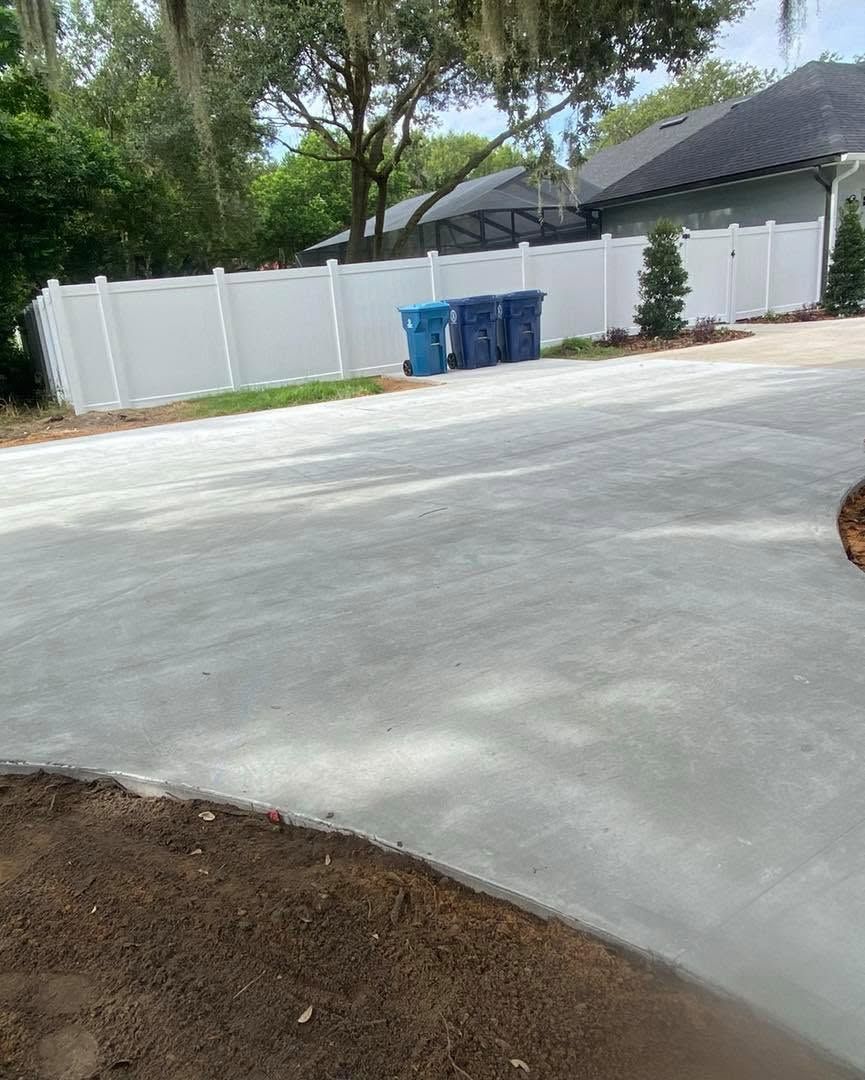
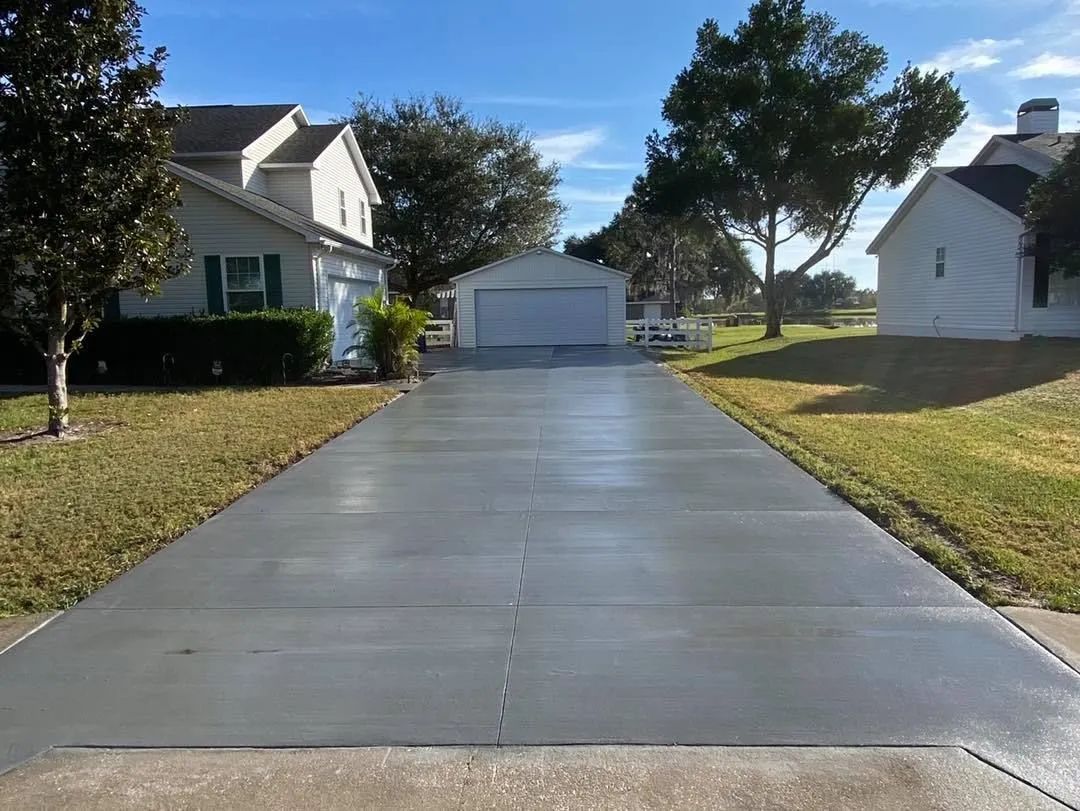
Plain concrete driveways offer a clean, modern look with minimal maintenance. They are versatile enough to fit any home style and are ideal for homeowners seeking a functional, cost-effective solution. Their installation is straightforward, allowing for quicker project completion. However, plain concrete can appear basic or cold if not paired with landscaping or complementary design elements.
Best Practices:
- Apply a broom finish for added traction and safety.
- Consider acid staining to add subtle color variations without the cost of full decorative concrete.
- Regular sealing every 3–5 years can protect against stains and minor cracks.
Stamped Concrete Driveways
Stamped concrete mimics the appearance of natural stone, brick, or wood, offering homeowners the beauty of high-end materials at a fraction of the cost. This style allows for extensive customization, from pattern selection to color choices, making it suitable for luxury homes or properties with a strong architectural theme.
Challenges and Considerations:
- Stamped concrete can be more prone to cracking due to intricate designs, so professional installation is recommended.
- Sealing is essential to maintain color vibrancy and protect the surface from oil, dirt, and UV exposure.
Real-World Example:
A homeowner in a suburban neighborhood chose stamped concrete resembling cobblestone to complement their Victorian-style home. The result was a visually striking driveway that increased property value and received positive feedback from neighbors.
Exposed Aggregate Concrete
Exposed aggregate concrete provides texture and visual interest by revealing decorative stones within the concrete surface. This style is ideal for homeowners seeking a slip-resistant option, particularly in areas with heavy rainfall or where children frequently play.
Advantages:
- Exceptional durability and grip under wet conditions.
- Low maintenance compared to decorative stamped concrete.
- Can be combined with borders or patterns for a more custom appearance.
Best Practices:
- Choose aggregate sizes and colors that complement the home’s exterior.
- Ensure proper sealing to prevent moss growth or discoloration over time.
Colored and Stained Concrete
Adding color or stains to a concrete driveway is a cost-effective way to create a unique look. Integral color is added to the concrete mix, producing a uniform hue, while surface-applied stains offer natural, variegated finishes.
Benefits:
- Customizable to match home exteriors or landscape themes.
- Can create an upscale appearance without the expense of stone or pavers.
- Reduces the visual impact of minor stains or dirt over time.
Challenges:
- Color fading over time may occur if UV-resistant sealers are not applied.
- Professional application ensures consistent color and coverage.
3. Practical Considerations for Selecting the Right Style
Climate and Weather Conditions
Weather plays a crucial role in determining the most suitable concrete driveway style. Freeze-thaw cycles in colder climates can cause cracking in poorly mixed or installed concrete. Decorative surfaces may also be more susceptible to damage from heavy snow removal equipment. In hot climates, lighter-colored concrete or reflective finishes can reduce heat absorption, keeping the driveway cooler and prolonging material life.
Maintenance Requirements
Different styles come with varying maintenance needs. Plain concrete requires minimal upkeep beyond periodic cleaning and sealing. Stamped and colored concrete demand more attention, including resealing every 2–3 years to preserve aesthetics and prevent surface wear. Exposed aggregate requires occasional pressure washing to remove debris trapped between stones. Understanding the level of care you are willing to commit to is critical in style selection.
Budget and Longevity
While plain concrete is the most cost-effective, decorative options provide higher aesthetic value at a higher price. When evaluating cost, consider the driveway’s expected lifespan, potential repair costs, and impact on property value. Investing in quality installation and materials upfront often reduces long-term expenses associated with repair, replacement, or resurfacing.
4. Design Tips for Enhancing Driveway Appeal
Complement Your Home’s Architecture
Your driveway should harmonize with your home’s design. Modern homes pair well with smooth, minimalist concrete finishes, while traditional or craftsman-style homes often benefit from stamped patterns or exposed aggregate surfaces. Consider coordinating color tones and textures with roofing, siding, and landscaping elements.
Incorporate Borders and Patterns
Adding borders or subtle patterns can elevate even plain concrete driveways. Borders in contrasting colors or materials such as brick or pavers create a frame that visually enhances the driveway and defines its edges. Patterns such as herringbone, basketweave, or diamond shapes add dimension and a touch of sophistication.
Ensure Functional Design
Functionality should never be sacrificed for aesthetics. Ensure your driveway accommodates vehicle size, provides adequate turning radius, and includes safe slopes for drainage. In larger properties, multiple entry points or extended driveways can be integrated without compromising style by using consistent concrete finishes.
Lighting and Landscaping Integration
Driveway lighting and landscaping can significantly enhance curb appeal and safety. Low-voltage LED lighting along borders or embedded in the surface creates an inviting ambiance and highlights design details. Landscaping elements, such as hedges or stone planters, provide a natural complement to concrete surfaces and reduce stark visual contrast.
5. Working with Professionals
Choosing a Reliable Contractor
Professional installation is crucial for longevity and performance. Contractors bring expertise in site preparation, concrete mix selection, finishing techniques, and curing processes. Researching local contractors, reading reviews, and requesting portfolios ensures your project meets quality standards.
Planning and Consultation
Effective planning begins with a site evaluation, including soil testing, slope analysis, and drainage assessment. Contractors can offer insights into style feasibility, material recommendations, and budget considerations, helping homeowners make informed decisions.
Installation Process Insights
Understanding the installation process helps set realistic expectations. Key steps include:
- Excavation and base preparation.
- Formwork and reinforcement placement.
- Pouring, leveling, and finishing concrete.
- Curing and sealing to enhance durability.
Experienced contractors also provide guidance on maintenance schedules and protective measures to extend the driveway’s lifespan.
Expert Installation and Design for Durable Driveways
Selecting the right concrete driveway style involves balancing aesthetics, functionality, budget, and long-term maintenance. From the simplicity of plain concrete to the elegance of stamped patterns or the practicality of exposed aggregate, homeowners have diverse options that can enhance curb appeal and add value to their property. Careful consideration of climate, home architecture, and intended use ensures that your driveway not only looks appealing but performs reliably for decades. Incorporating thoughtful design elements such as borders, lighting, and landscaping integration further elevates the overall impact. Working with experienced professionals ensures proper installation, optimal material choice, and guidance on long-term maintenance, avoiding common pitfalls that can compromise both appearance and durability.
For homeowners in Lake Wales, FL, AR Gator
provides 15
years of expert experience in designing and installing concrete driveways that blend durability with aesthetic appeal. Our team understands the nuances of concrete construction, from site preparation to decorative finishing, ensuring each project meets the highest standards. With a commitment to quality, transparency, and customer satisfaction, AR Gator
has become a trusted authority in driveway solutions. Whether you seek a sleek modern finish or a custom decorative design, our professionals guide you through every step, delivering driveways that enhance both your property’s beauty and long-term value.