
Pooling Water on the Patio After Rain? Why the Slope Was Off
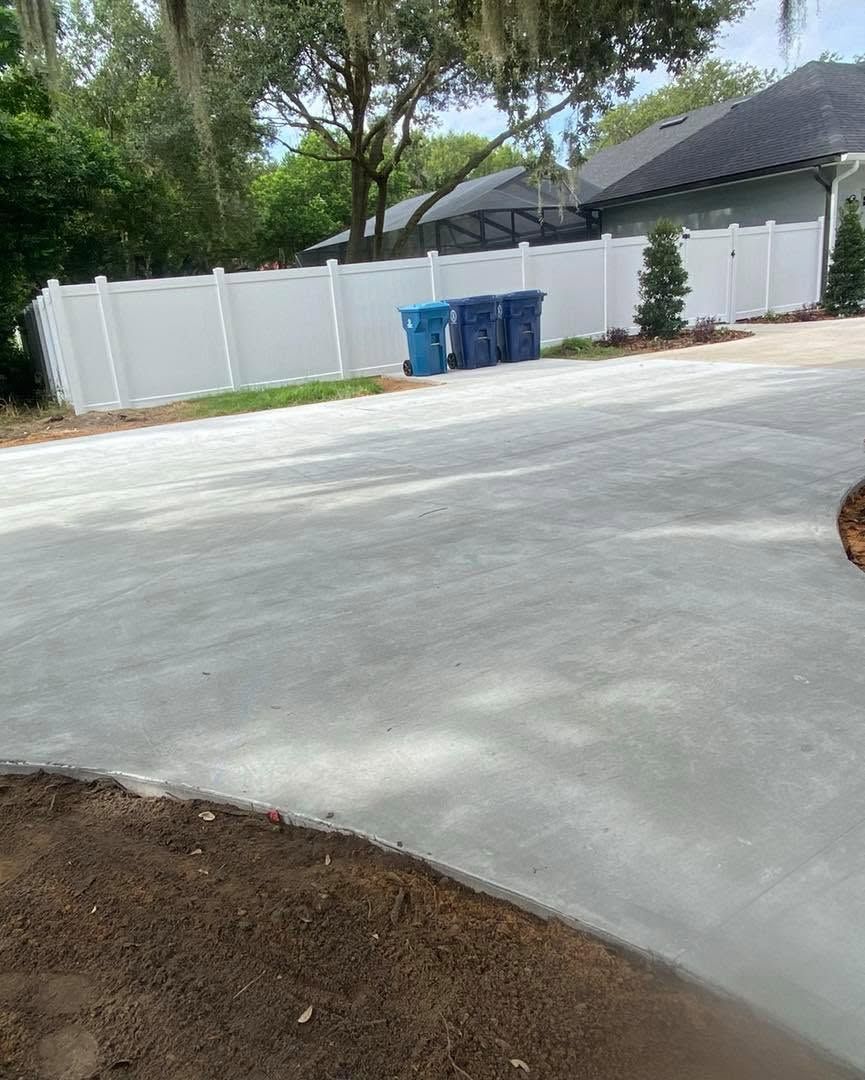
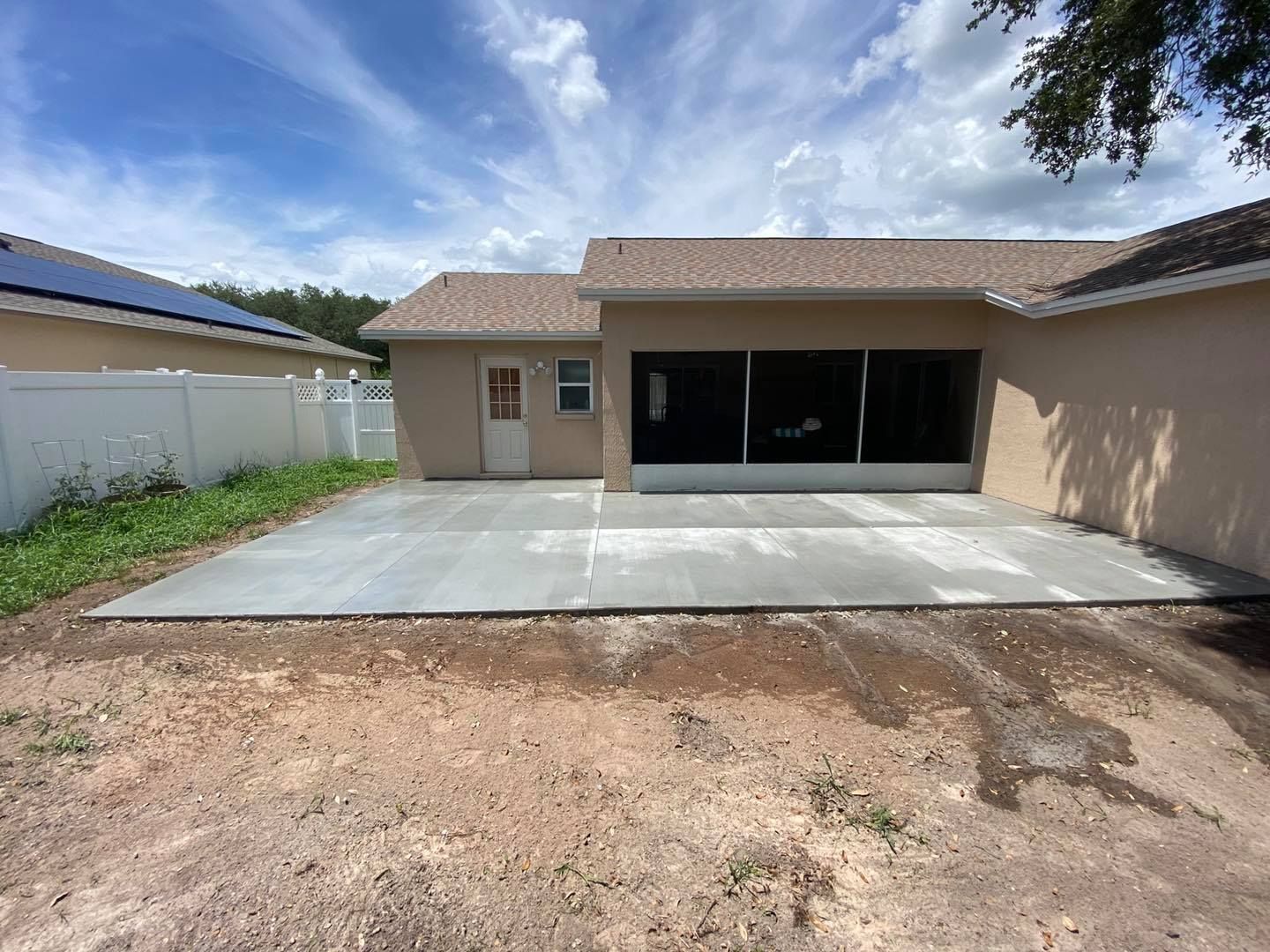
Quick Answer: Standing water on a concrete patio after rain is a slope problem, not bad luck. Exterior slabs need a consistent grade of roughly 1 to 2 percent away from the house, which works out to about 1/8 to 1/4 inch of fall for every foot of slab, and in a climate that gets Central Florida's rainfall totals, contractors generally aim for the higher end of that range rather than the bare minimum. A flat or reverse-pitched patio usually traces back to one of three things: the forms were set without enough fall, the crew screeded it level instead of to the pitch, or the ground beneath one section settled after the pour and erased the grade that used to be there. Left alone, the water that collects does more than look bad. It pushes moisture toward your foundation, gives mosquitoes a breeding site, and leaves mold and algae stains that keep coming back no matter how often you scrub them. Depending on how far off the grade is, the fix ranges from regrading the soil around the edge, to lifting the slab with polyurethane injection, to tearing out the section and repouring it with the correct pitch built in from the start.
Florida rain gives a poorly graded slab nowhere to hide. Between the summer wet season, sandy soil that shifts more than people expect, and afternoon storms that can drop an inch of rain in twenty minutes, a patio that's even slightly flat or tilted the wrong way is going to show it, fast and often.
What "Proper Slope" Actually Means on a Poured Slab
How a Flat or Reverse-Pitched Patio Actually Happens
Tip:
Before you assume a puddle means the whole patio was poured wrong, run a simple test once the surface dries — pour a five-gallon bucket of water slowly at the high end and watch where it travels. If most of the slab sheds water the way it should and only one section holds it, you're likely looking at localized settling rather than a slab that failed everywhere, and that changes what kind of fix actually makes sense. Before you assume a puddle means the whole patio was poured wrong, run a simple test once the surface dries — pour a five-gallon bucket of water slowly at the high end and watch where it travels. If most of the slab sheds water the way it should and only one section holds it, you're likely looking at localized settling rather than a slab that failed everywhere, and that changes what kind of fix actually makes sense.
What Standing Water Does to Your Property Over Time
Fixing a Slab That Won't Drain
Warning:
Don't let anyone "fix" a drainage problem by adding a surface coating, extra sealant, or a thin skim coat over the low spot. None of that changes the underlying pitch, and a skim layer poured over an active low point tends to crack and delaminate faster than the original slab did, because it's bonded to a surface that's still shaped wrong underneath it.
Frequently Asked Questions
How much slope should a concrete patio actually have?
A working range of 1 to 2 percent, or roughly 1/8 to 1/4 inch of fall per foot away from the house, is the standard. High-rainfall climates favor the steeper end.
Can I tell if my patio's slope problem is from the original pour or from later settling?
Often, yes. A pour error tends to affect the whole slab consistently. Settling-related pooling stays more localized, a low spot in one area while the rest still sheds water normally.
Is standing water on a patio actually bad for my home, or just annoying to look at?
It's more than cosmetic. Water sitting near a foundation for extended periods raises the chance of moisture intrusion, and a slab that holds water for days becomes a repeat mosquito breeding site.
Does adding a sealant fix a patio that holds water?
No. Sealant protects the surface from staining and minor moisture absorption, but it doesn't change the slab's underlying pitch. A poorly sloped patio still pools water no matter how well it's sealed.
Will polyurethane leveling work on any patio that holds water?
It works well when a slab has settled unevenly but is still structurally sound, since the goal is lifting the concrete back to its designed grade. A wrong-pitch pour has no correct grade to restore.
How quickly does standing water become a problem after a storm?
Faster than most people expect in Florida's climate. Warm, humid air speeds up both mosquito breeding and mold growth, so a puddle lingering more than a day or two is already working against you.
Reading the Slope Before the Next Storm Arrives
Standing water on a patio is rarely a mystery once you understand what the surface is telling you. Concrete sheds water only when the pitch sends it somewhere, and a slab that puddles has either lost that grade or never had it. The distinction between a settled corner and a slab poured flat matters, because each points toward a different repair. Diagnosing the cause honestly comes first, long before anyone talks about lifting concrete or tearing a section out.
AR Gator
Construction has spent 15years working with the sandy soil and heavy wet-season rain that make drainage failures common around Lake Wales, FL, and that experience shapes how a puddling patio gets read. A slab that clears itself within an hour behaves nothing like one still holding water two days later, and the difference usually traces back to a measurement made when the forms went down. Getting that pitch right is what keeps the weather working with the slab.